
Palm Oil Global Community: Building a Stronger and More Sustainable Supply Chain
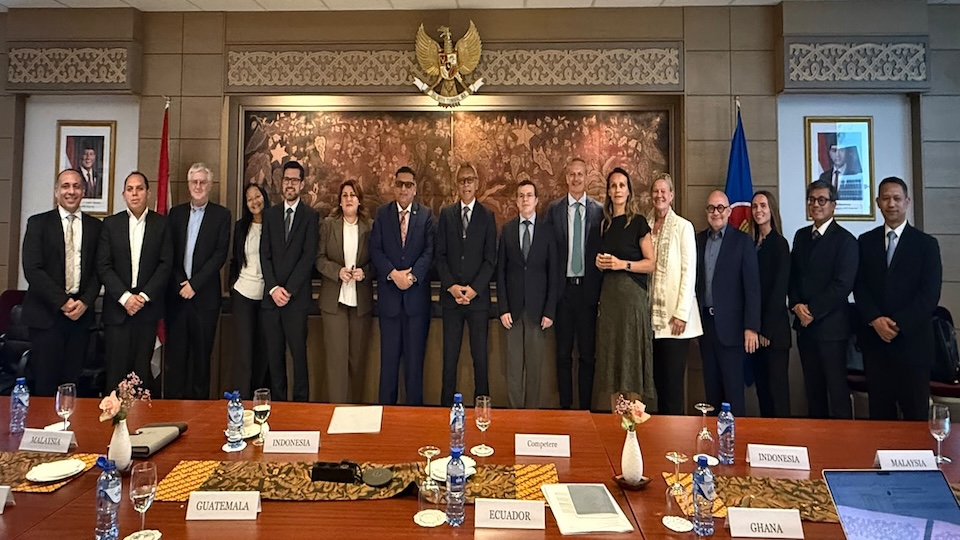
The Palm Oil Global Community brought together producing countries, institutions, industry associations and sustainability partners to discuss the challenges shaping the future of the palm oil supply chain. I contributed to the gathering hosted by the Embassy of Indonesia, with participants joining both in person and remotely.
The meeting confirmed something increasingly important: the palm oil sector is not simply reacting to regulatory and sustainability challenges. It has built a global community capable of anticipating them, sharing solutions and continuously improving the value and resilience of the supply chain.
Talking Points
- A truly global producing-country community. Representatives from Colombia, Ecuador, Ghana, Guatemala, Honduras, Indonesia, Malaysia, Mexico, Nigeria, the Philippines, the Republic of the Congo and Thailand joined the discussion.
- EUDR readiness matters. Years of investment in traceability, monitoring, certification and sustainability have made palm oil one of the commodities most advanced in preparing for the EU Deforestation Regulation.
- Sustainability is a process of continuous improvement. The objective should not be to demonise or replace a commodity, but to strengthen its environmental, social and economic performance.
- Consumers need better information. Empowering consumers means helping them understand how supply chains are changing and recognise the progress achieved through certified and sustainable palm oil.
- Collaboration creates value. Governments, producers, companies, researchers and civil society need spaces where political and technical challenges can be discussed openly and pragmatically.
From Compliance to Value Creation
Hosted by the Embassy of Indonesia, the gathering brought together ambassadors and representatives of producing countries alongside the Council of Palm Oil Producing Countries (CPOPC), trade associations, national sustainable palm oil alliances and organisations including FONAP, Borneo Futures and Solidaridad.
DO NOT MISS IT: IFCN CONFERENCE: DAIRY HAS A VALUE PROBLEM
The closed-door discussion focused particularly on the implementation of the EU Deforestation Regulation (EUDR), addressing both its political and technical dimensions. Participants also discussed consumer empowerment and several initiatives underway across the sustainable palm oil ecosystem, including FONAP’s recent work.
The broader objective of the Palm Oil Global Community goes beyond regulatory compliance.
It is about increasing the value, resilience and sustainability of the entire supply chain, while ensuring that producing countries, companies and smallholders can remain part of that progress.
READ MY NEWS POLICY GUIDELINE ON ULTRA-PROCESSED FOODS
Palm oil has already travelled a long way on sustainability, human rights, livelihoods, traceability and monitoring. Those achievements should be recognised — without pretending that the work is finished.
The right approach is continuous improvement: acknowledge progress, address remaining challenges and keep moving forward.
DO NOT MISS MY TALK IN WARSAW ON PERSONALIZED PREVENTION
That is what the Palm Oil Global Community is being built to do.
