
Time to Personalize Prevention – GTIPA Annual Summit
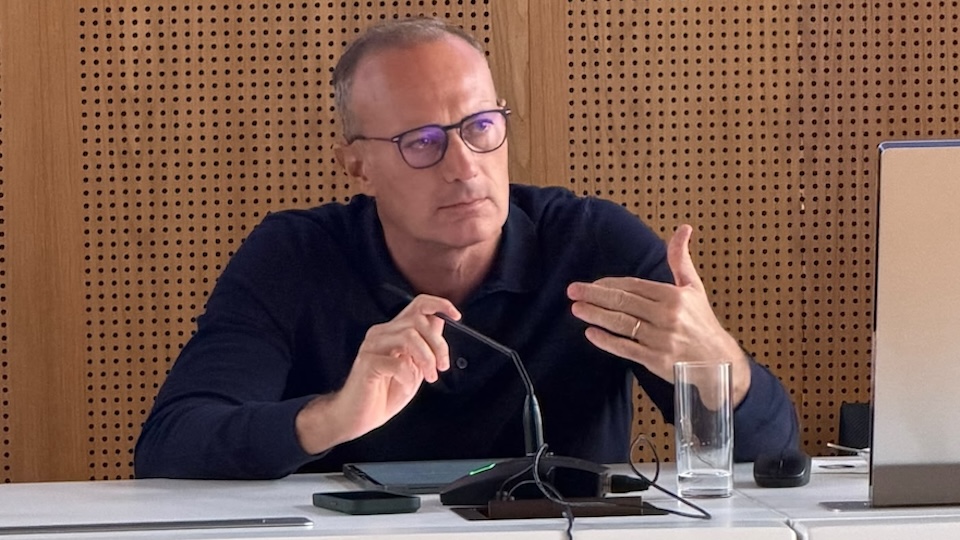
At the GTIPA Annual Summit in Warsaw, I joined the session “Policy to Drive Life-Science Innovation in Europe” to discuss a paradox: medicine is becoming increasingly personalized, while prevention remains largely standardized.
My argument was that personalized prevention should become a new frontier of European life-science innovation. AI, wearables, biomarkers, and behavioral science can help us move from population averages to individual risk trajectories – particularly for cardiometabolic diseases, and intervene before people become patients.
This requires more than technology. Europe needs better use of health data, rigorous validation of new tools, and incentives that reward risk reduction and prevention.
The goal is not simply to help people live longer, but to help them stay healthier for longer.
Takeaways
- Medicine is becoming personalized. Prevention remains standardized.
- Cardiometabolic risk is individual, dynamic, and multifactorial.
- AI and wearables can turn longitudinal data into actionable risk intelligence.
- Europe needs to reward innovation before people become patients.
- Personalized prevention can become a European life-science innovation strategy.
Personalized medicine, standardized prevention
When we discuss life-science innovation, we usually think about new drugs, biotechnology, patents, and clinical trials. All essential. But there is another frontier: keeping people healthier before they become patients. Cardiometabolic risk does not emerge from a single food, nutrient, or behavior. It develops through interactions among genetics, metabolism, body composition, physical activity and fitness, nutrition, sleep, sedentary behavior, and environment.
Two people with the same BMI can have very different metabolic profiles and trajectories of risk. Yet much of prevention still relies on population averages and standardized recommendations. We have increasingly personalized medicine, but remarkably standardized prevention.
DO NOT MISS PAGANINI NON RIPETE: WHAT IF THE MEDIA IS NOT THE PROBLEM?
From snapshots to trajectories
Healthcare traditionally works through snapshots: a medical visit, a blood test, a blood-pressure measurement. Our biology does not. We move, sleep, eat, exercise, and recover continuously.
Wearables, biomarkers, and digital technologies allow us to observe parts of this trajectory. AI can help connect these signals and identify patterns that would otherwise be difficult to detect. But collecting more data is not the objective.
The innovation is not the wearable. The innovation is turning longitudinal data into actionable risk intelligence.
The question changes from:
What is wrong with you today?
to:
Where is your risk heading?
From information to action
More information does not automatically produce healthier behavior.
This is where neuroscience and behavioral science matter. Human beings do not mechanically respond to information: habits, motivation, incentives, environment, and cognitive biases shape our decisions.
Personalized prevention should therefore become a continuous learning process:
Measure → Predict → Intervene → Learn → Adapt
Technology can help personalize interventions involving physical activity, nutrition, sleep, and other behaviors — while medicine and pharmacological treatment enter when necessary. There is no opposition between the two.
Personalized prevention is not an alternative to medicine. It extends the life-science ecosystem upstream.
DO NOT MISS AI AND THE FUTURE OF WORK
A European innovation strategy
If Europe wants to lead in personalized prevention, three things matter.
First, data: responsibly connecting clinical information, biomarkers, and longitudinal individual data while protecting privacy and security.
Second, validation: not every wearable, algorithm, or digital biomarker works. Europe needs rigorous evidence, but also pathways that allow innovators to experiment, validate, and scale.
READ IT AGAIN: WHAT KEEPS US STILL
Third, incentives. Healthcare systems are very good at paying once people become sick. They are much less effective at rewarding innovation that reduces risk years earlier.
If we want innovation in prevention, someone must have an incentive to innovate before the patient becomes sick.
Europe often asks how it can catch the United States in biotech, venture capital, and life sciences. But catching up is not a strategy. Europe has excellent science, sophisticated healthcare systems, strong medical institutions, growing AI capabilities, and potentially extraordinary health datasets. Connecting these assets around personalized prevention could become a distinctive European opportunity.
The brain and the body are dynamic systems. Prevention should become dynamic too.
Personalized prevention should not be seen only as a public-health strategy. It can become a European life-science innovation strategy.
