
Longevity Beyond Lifespan: The Economics of Aging, Personalized Prevention and AI – Rome
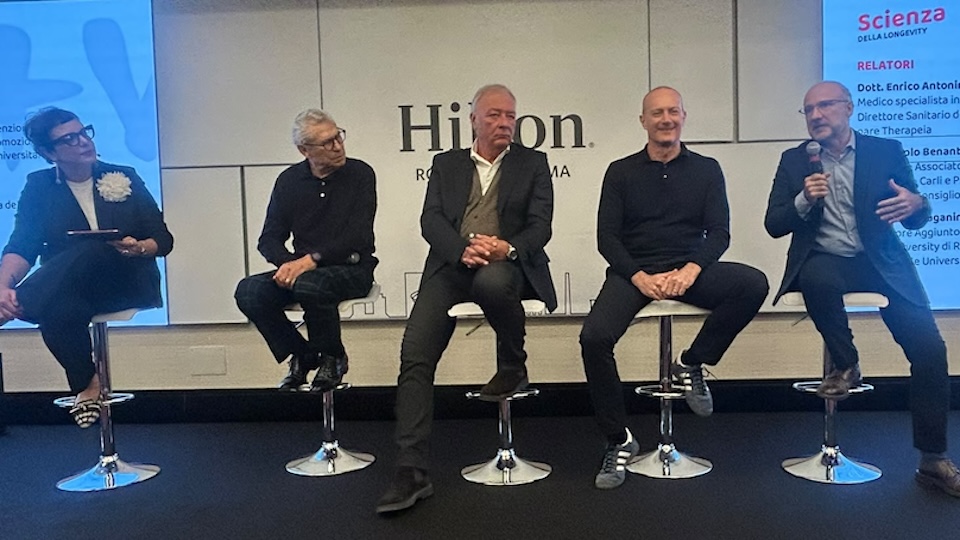
At the +VITA Forum – Oltre la Longevità: Come Vivere Meglio, Più a Lungo, held in Rome, I joined Father Paolo Benanti, Professor Matteo Tosato, and other experts to discuss the scientific, economic, and technological challenges of longevity.
My contribution focused on a fundamental paradox: humanity has spent centuries trying to extend life, yet today we increasingly describe population aging as an economic burden.
I argued that the real challenge is not simply to live longer, but to extend healthspan, the years lived in good health, through innovation, personalized prevention, artificial intelligence, and greater individual empowerment.
Talking Points
- Longevity is an achievement, not an economic failure. Longer lives are a triumph of innovation, not simply a burden on society.
- From lifespan to healthspan. The challenge is not just living longer, but living healthier, more active, and independent lives.
- From standardized nutrition to personalized prevention. AI, biomarkers, and wearables can empower individuals to make better health decisions.
- The food industry is part of the solution. Innovation can improve food safety, accessibility, and nutritional quality beyond simplistic classifications.
- The longevity economy needs evidence, not promises. Scientific innovation must deliver measurable health benefits, not exploit the fear of aging.
Longevity: a triumph of innovation and a challenge for economic policy
Economics has often been called the dismal science. Perhaps because economists have an extraordinary ability to find problems even in humanity’s greatest achievements.
For centuries, people struggled to survive longer. Today, after remarkable improvements in life expectancy, we worry about the economic consequences of aging populations. Italy illustrates this paradox particularly well. With almost one-quarter of its population aged 65 or older, the country faces growing pressure on pensions, healthcare and the workforce.
DO NOT MISS THE PODCAST ON AI AND POLITICS: ALL THE TRICKS TO SURVIVE
But older citizens are not merely recipients of public expenditure. They are also consumers, entrepreneurs, investors, workers, caregivers and active participants in society. The longevity economy should therefore be understood not simply as the cost of aging, but as an opportunity to redesign how we work, learn, innovate and participate throughout longer lives.
The central economic question is not how much longer lives cost. It is how we can create the conditions for people to remain healthier, more autonomous and socially active.
From standardized nutrition to personalized prevention
One of the most promising opportunities comes from the convergence of nutrition science, digital technologies and artificial intelligence. Imagine receiving a personalized food delivery designed around your nutritional requirements, physical activity, health indicators and preferences.
An AI-powered system could help organize meals and nutritional choices using information from wearable devices, biomarkers, and individual lifestyle patterns. Such a scenario is not yet a universally validated or widely available model of healthcare. But it illustrates a potentially important direction for innovation.
CHECK OUT MY LAST PAPER ON THE SUGAR TAX
For decades, food production has relied on standardization to deliver affordable, safe, and accessible products to large populations. Emerging technologies could increasingly complement those advantages with greater personalization.
However, personalized nutrition alone is not enough. Health depends on the interaction between nutrition, movement, sleep, mental well-being, genetics, environment, and socioeconomic conditions.
This is why I advocate moving beyond one-size-fits-all approaches toward personalized prevention: using scientific evidence and technology to help individuals understand their risks and make better-informed decisions. Artificial intelligence should not replace human judgment. It should strengthen it.
Beyond food classifications: innovation and informed choices
The debate over ultra-processed foods illustrates the limitations of overly simplified approaches to nutrition. Food processing is an important technological and economic activity. It can improve safety, preservation, convenience, and accessibility. At the same time, certain processed food products and dietary patterns raise legitimate nutritional and public-health concerns.
The challenge is to understand which characteristics of foods, consumption patterns, and broader lifestyles contribute to health risks, rather than assuming that processing alone provides a complete explanation.
DO NOT MISS MY TALK ON SCIENCE AND SIMPLIFICATION
Public policy should encourage scientific evaluation, nutritional education, innovation and meaningful consumer information. The objective should not be to replace individual judgment with increasingly rigid classifications, but to equip people with the knowledge and opportunities to make healthier choices.
The longevity business: innovation or the commercialization of fear?
The desire to live longer is as old as humanity itself.
Ancient civilizations searched for the elixir of life. Today, the same aspiration fuels a growing market for supplements, diagnostics, biological-age tests, and anti-aging technologies.
There is nothing inherently wrong with this market. Investment, competition, and entrepreneurship can accelerate scientific discovery and expand access to innovation. But the distinction between evidence and marketing is essential.
A promising biomarker does not necessarily demonstrate a longer or healthier life. A personalized recommendation is not automatically more effective than established preventive measures. And a commercially successful anti-aging intervention is not necessarily a clinically validated one.
CHECK IT OUT: FOOD SECURITY IS NATIONAL SECURITY
The question is whether innovation produces measurable benefits for human health or merely offers increasingly sophisticated ways to monetize our fear of aging.
AI could play an important role in helping individuals understand scientific evidence, assess health claims, and navigate complex choices. Yet the same technologies could also be used to exploit personal vulnerabilities through increasingly targeted commercial persuasion. This makes transparency, scientific validation, privacy, and individual autonomy essential conditions for responsible innovation.
The real goal: adding freedom to longer lives
Longevity raises questions that extend far beyond medicine and economics. What does it mean to live well? What role should technology play in shaping our choices? And how do we ensure that the benefits of scientific progress are not reserved for a privileged minority?
DO NOT MISS MY TALK IN COPENHAGEN: THE MEDITERRANEAN WAY
These questions connect health innovation with human development. The future of longevity should not be defined exclusively by the number of years we can add to human life, nor by the size of the markets that emerge around aging. It should be defined by our ability to expand people’s capabilities, independence, and opportunities throughout their lives.
We have learned to add years to life. The next challenge is to add health, autonomy, and freedom to those years.
